meet your mind on paper
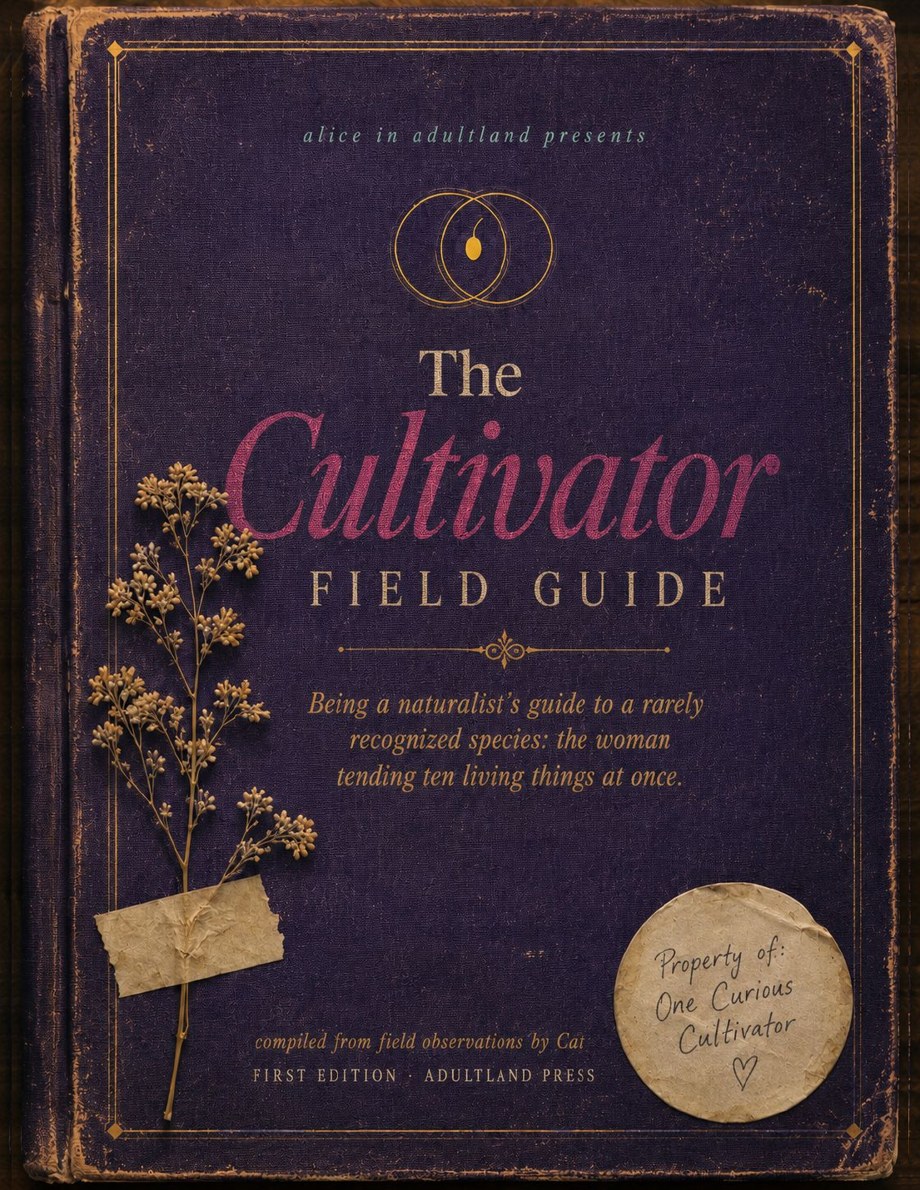
How am I doing so much… and still feel so behind?
A beautifully illustrated guide to understanding the mind you’ve spent years apologizing for.
a field report, two days in
“I’m halfway through, and I don’t even know what to say. My ‘Wait’ page is page 40. I actually teared up. But so far everything is me. All of it.”
a Cultivator inside Adultland, reading her copy
If you’ve ever…
- reorganized the entire closet at 11pm because the idea arrived and it wasn’t taking no for an answer
- stared at one text message for three days
- planned the most thoughtful party anyone’s ever seen, then gone completely empty an hour after the last guest left
- kept the 11pm ledger: lying in bed scoring everything you forgot, dropped, or could have done better
- felt everything at full volume one day and needed total silence the next
- moved mountains on Tuesday and lost to the laundry on Wednesday
- been “so capable” to everyone around you, and a complete mystery to yourself
…then this field guide was written for you. Every page of it.
There’s a version of you that can do anything. She plans the whole trip, teaches herself the software, reorganizes the entire closet at 11pm because the idea arrived and it wasn’t taking no for an answer.
And there’s a version of you that stares at one text message for three days.
Some days you move mountains. Other days the laundry wins. Neither one is the whole story.
This is not a workbook.
There’s no homework in here. No habit tracker. No 30-day plan waiting to become another thing you abandoned.
The Cultivator Field Guide is a 73-page illustrated field guide to how your mind actually works, written the way naturalists write about a rare and remarkable creature. Because that’s what you are. It reads the way you actually read: the parts you need, in any order, at whatever hour your brain decides it’s time.
Every page is illustrated like a Victorian naturalist’s notebook, so it feels less like reading self-help and more like finding a forgotten field guide that somehow already knew you.
a peek inside


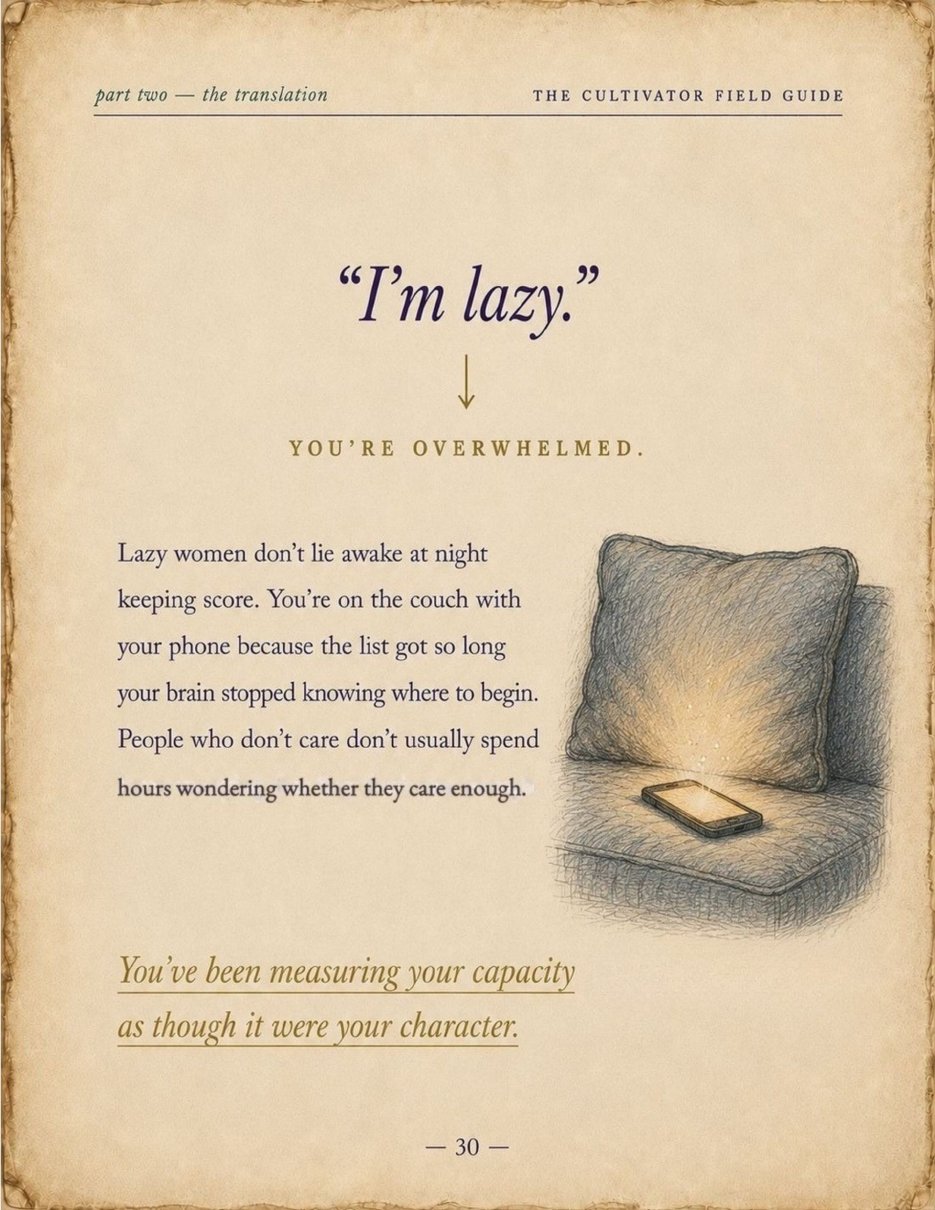
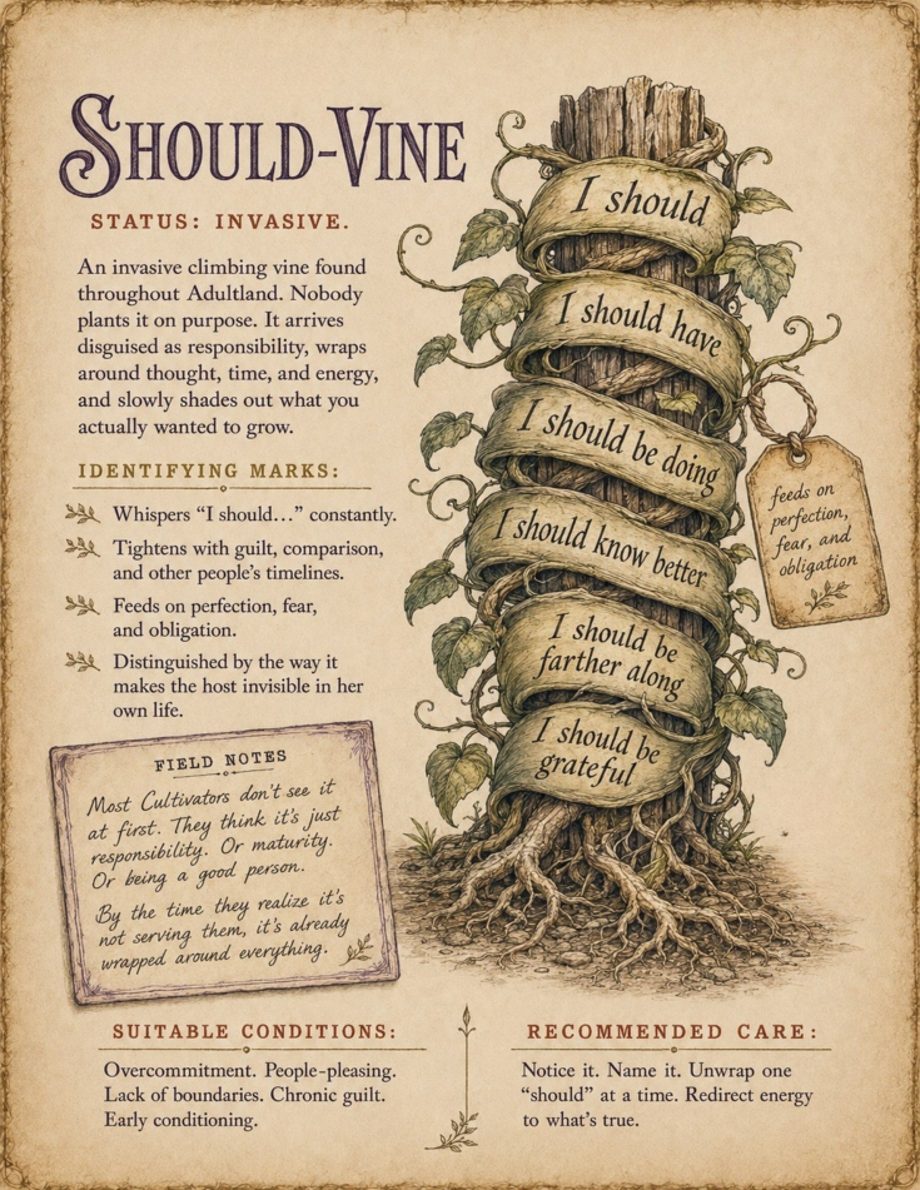
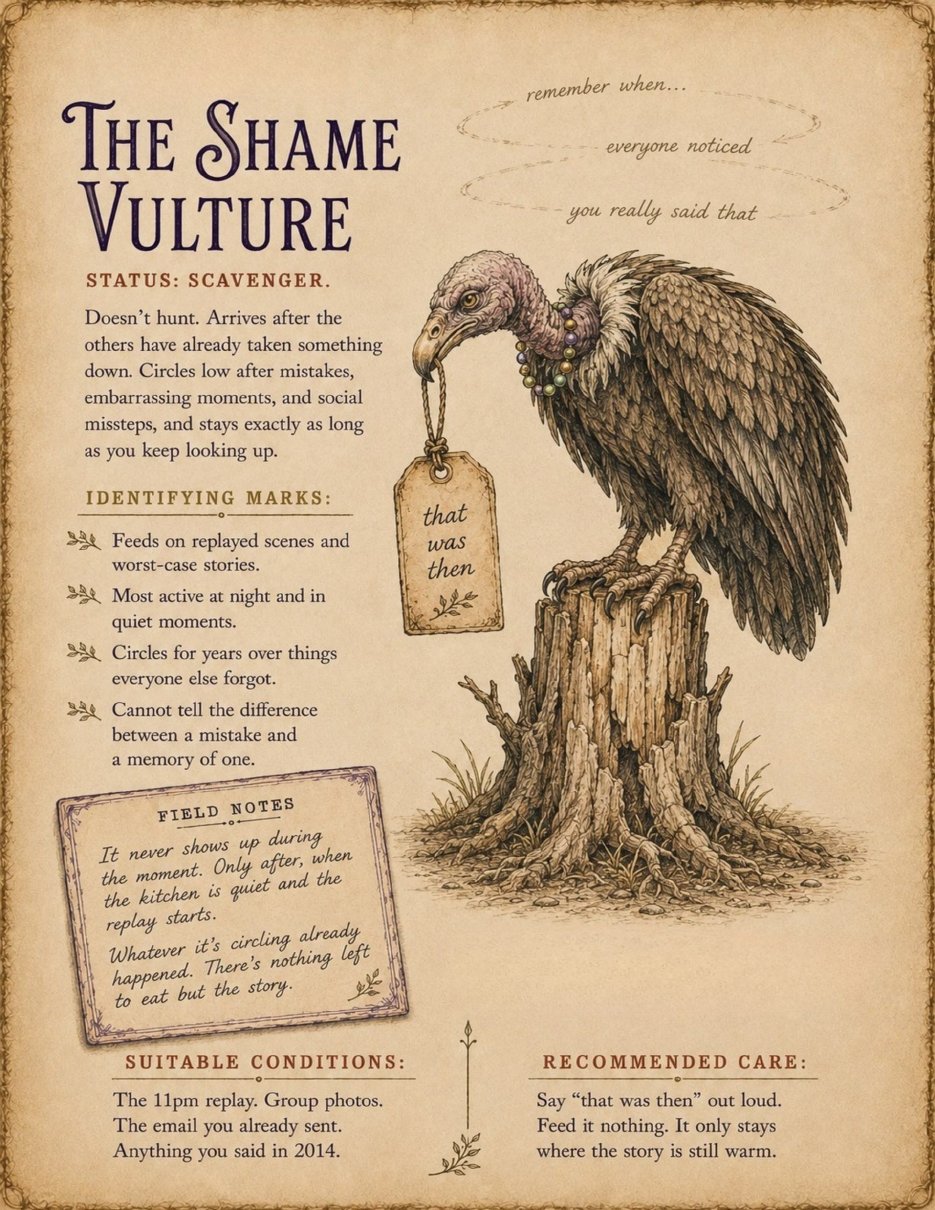

Inside, you’ll discover
- Why the dreamer and the doer were never two different women. Eight field markings of the Cultivator mind, including the lopsided genius, the 11pm ledger, and the weather patterns everyone else calls inconsistency.
- What “lazy,” “scattered,” and “can’t keep up” actually mean when someone finally translates them correctly. Hint: you’ve been measuring your capacity as though it were your character.
- The predators that hunt your garden. The Should-Vine. The Comparison Hawk. The Shame Vulture. None of them have teeth. They hunt entirely with sentences.
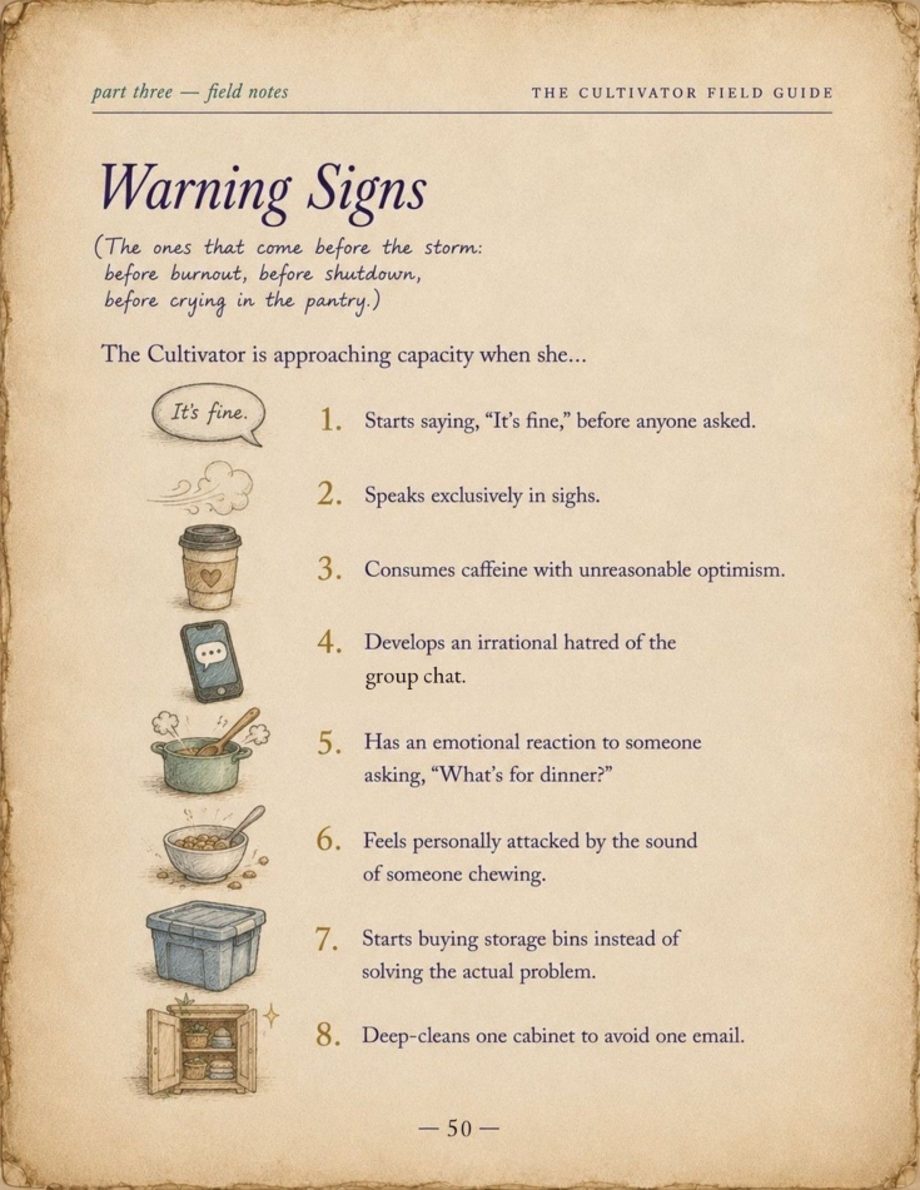
- Fifteen warning signs that read like a fuel gauge, not a character arc.
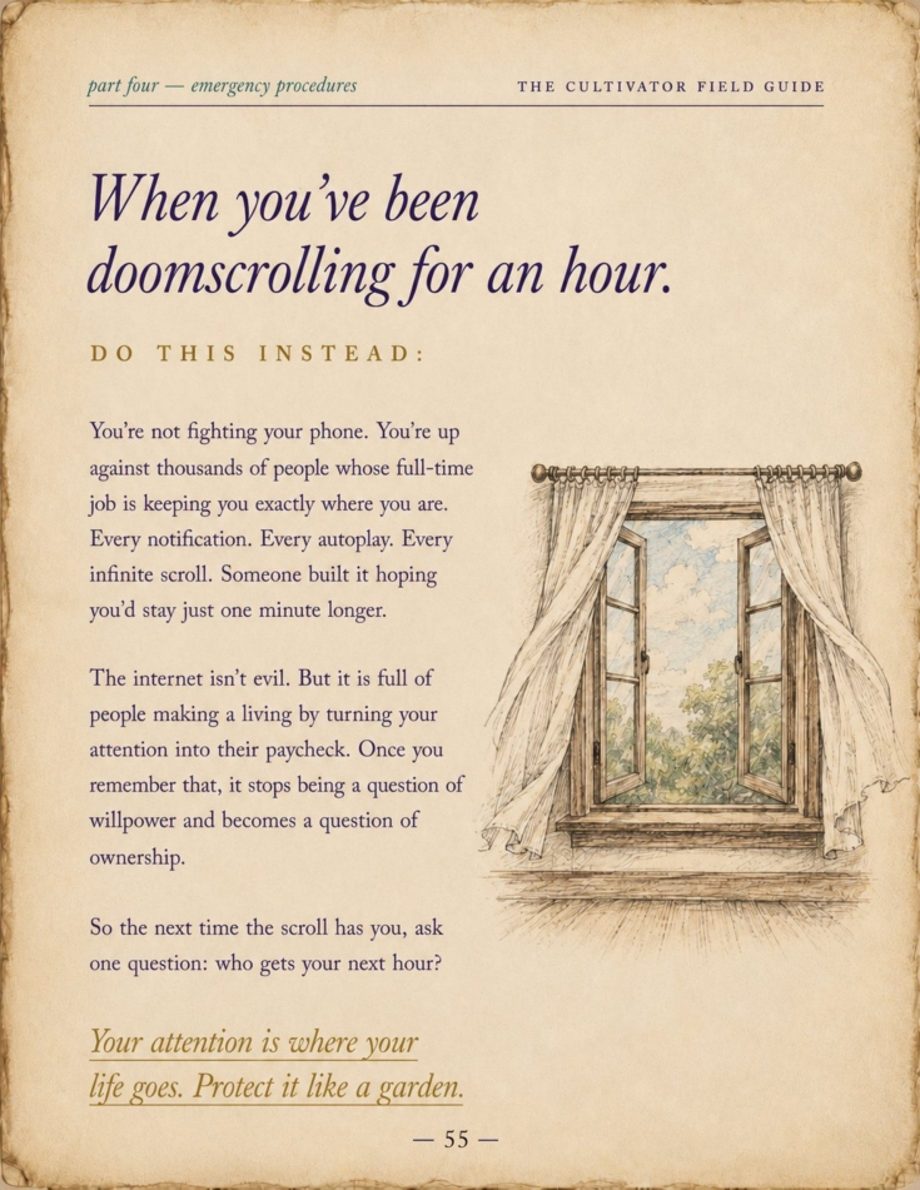
- Eight emergency pages for the days that swallow themselves whole. When you’ve been doomscrolling for an hour. When the house is a disaster. When you can’t make yourself move. When you feel nothing at all.
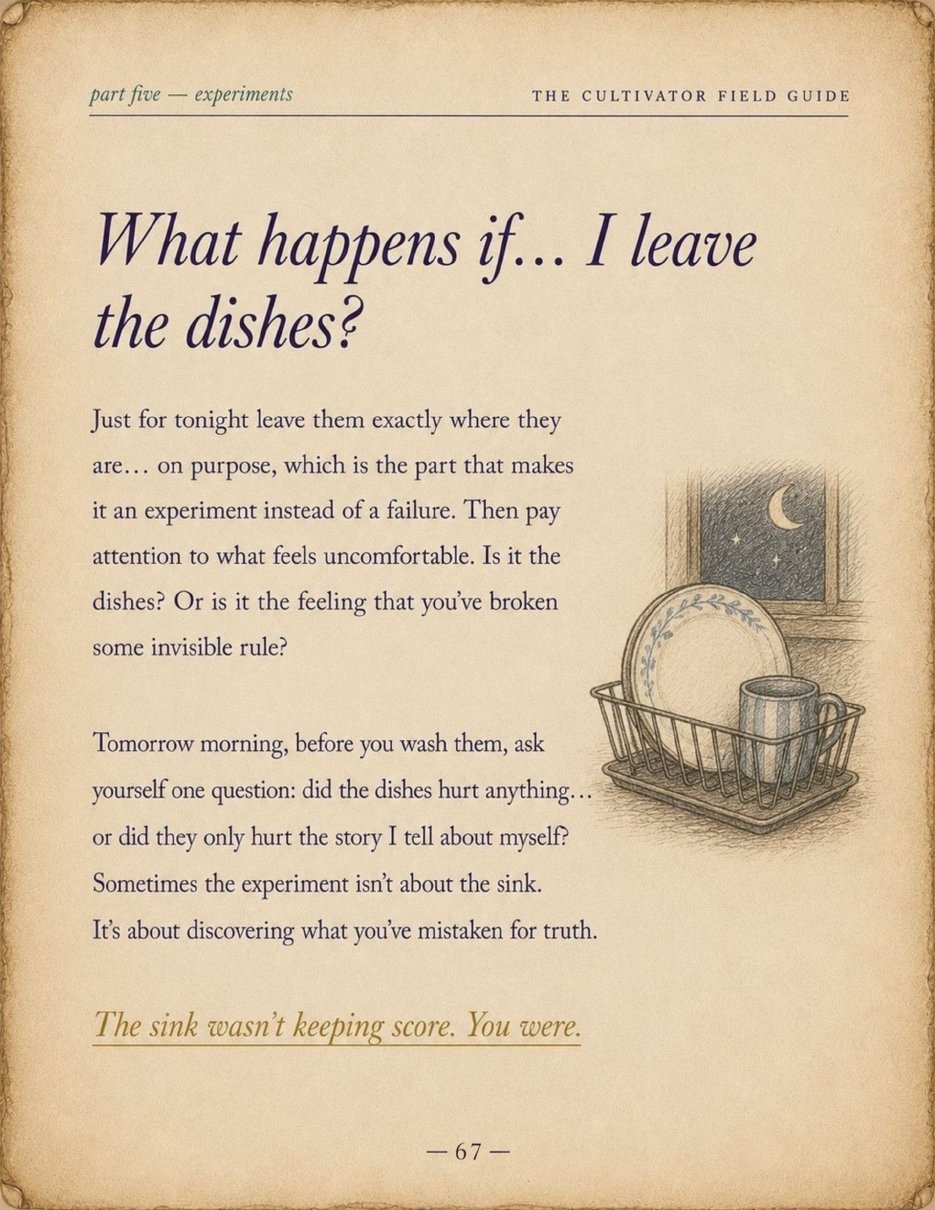
- Five tiny experiments instead of impossible expectations. Leave the dishes. Rest before you’re exhausted. The sink wasn’t keeping score. You were.
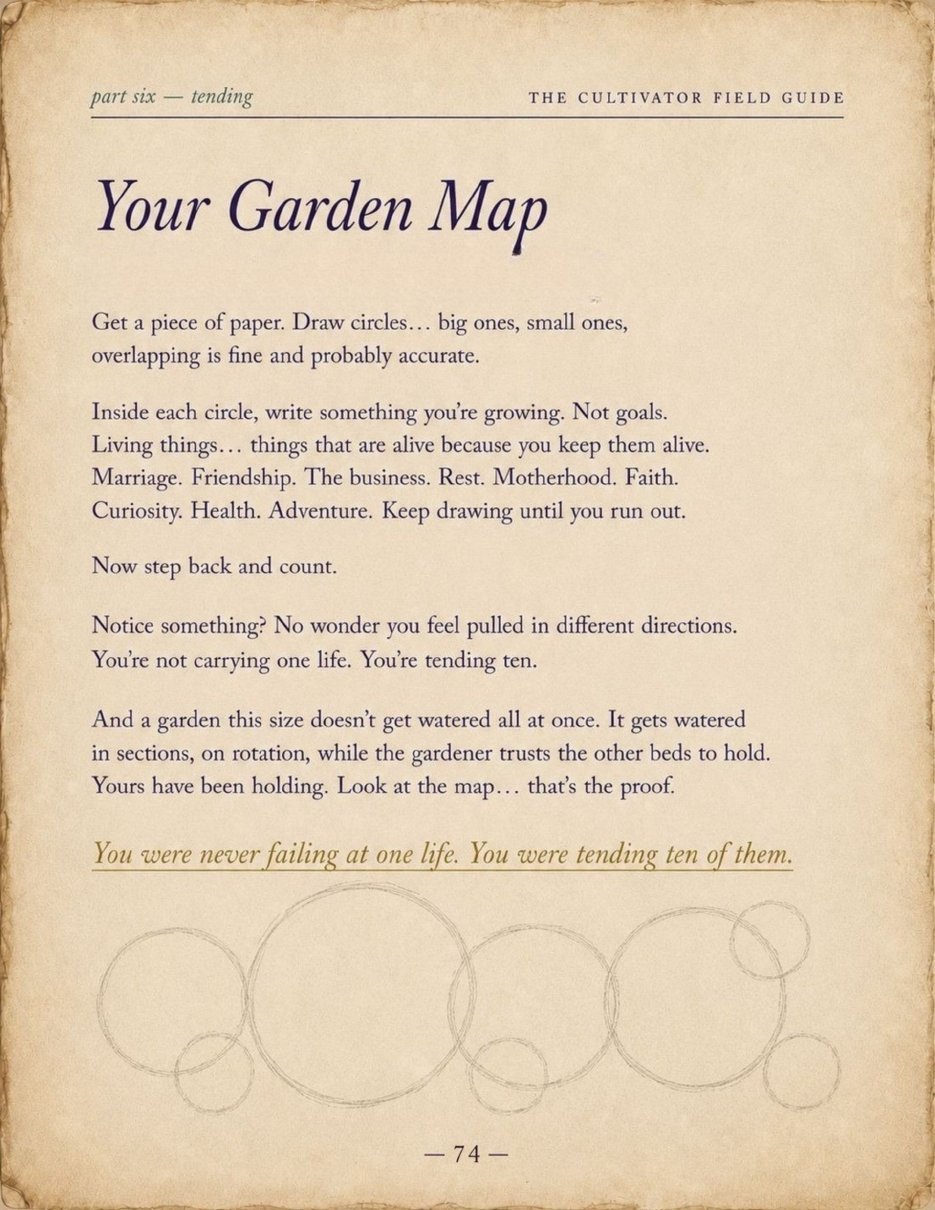
- Tending: your garden map, the women you keep becoming, and a letter for whenever we meet again. You were never failing at one life. You were tending ten of them.
Why I made this
I found my own name at the bottom of a research rabbit hole. I went in looking for answers for someone I love, and realized every page was describing me.
After a few years of trying to outsmart, out-organize, and out-discipline my ADHD, I finally got tired of treating myself like a problem to solve. This brain had carried me through thirty-three years of life. It had built a career, raised three children, started a business, and never once stopped imagining what might be possible. One day I looked back at everything she’d carried me through and thought, “Maybe she’s earned the benefit of the doubt.” That changed everything.
She’d gotten me this far. Maybe she deserved a guide instead of another rescue mission.
Not something to finish. Something to come back to.
Most books like this get read once and shelved. This one is built for the nightstand. One hard Tuesday you’ll remember the Shame Vulture, or the emergency pages, or the sentence you read out loud to an empty kitchen, and you’ll know exactly where to find it.
In a world of downloads you’ll never open twice, this one was made to be kept.
field reports
From the women who already have one
I love the Cartographer guide. It feels absolutely like me… The Cartographer is a description that honors who i am in a positive way and does not contain words like “disorder” in it. I am IN order for who my creator meant me to be.
cartographer guide
I feel so completely seen it feels raw and vulnerable in a way that is both a relief and terrifying, and also makes me want to cry.
cartographer guide
I felt both recognized and exposed!
cartographer guide
I’ve added this place to my bookmarks on my home computer and my iPad - because it does mean something and I’m glad I found it… I’m learning a lot about myself in the process.
inside adultland
I love that last question on your list - “who would I be if I stopped trying to perform adulthood correctly for five minutes?” That is going to resonate with me for awhile.
inside adultland
Your insight is incredible, and you are able to put it into words that make sense.
inside adultland
Right now, I’m learning how to be me. I used to know. I can know again.
her first day inside
Knowing that this space Cat created will take you as you are in this moment is a relief in itself.
inside adultland
Thank you for creating safe spaces to be ourselves ⭐️
her first day inside
Read a few pages first.
If you don’t feel more understood than you did before you opened it, send me an email within 30 days and I’ll happily refund your purchase.
The top 1% invest in the one asset responsible for every decision they make: their mind.
Take the guide home
$27
73 illustrated pages · instant download · yours forever
Meet yourself on paper
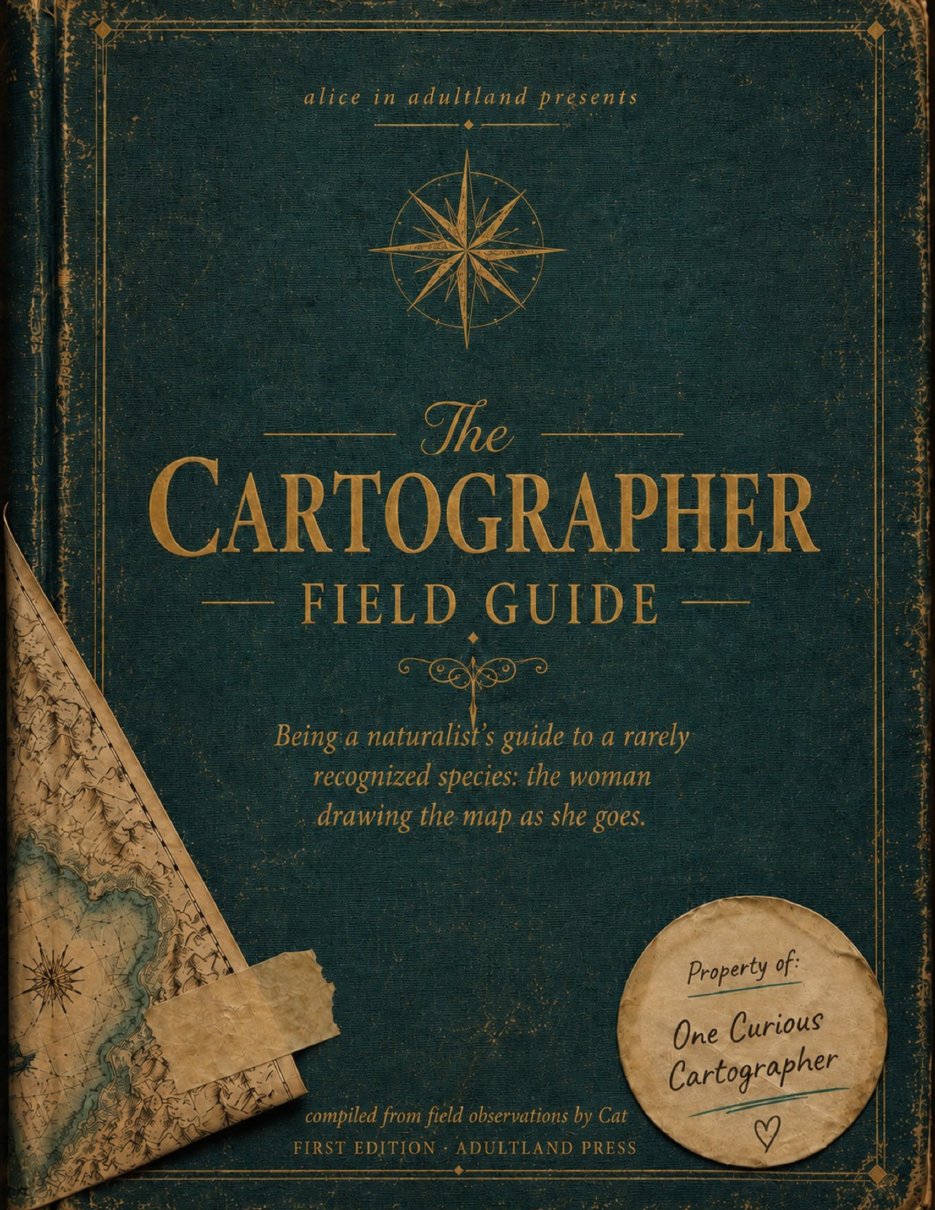
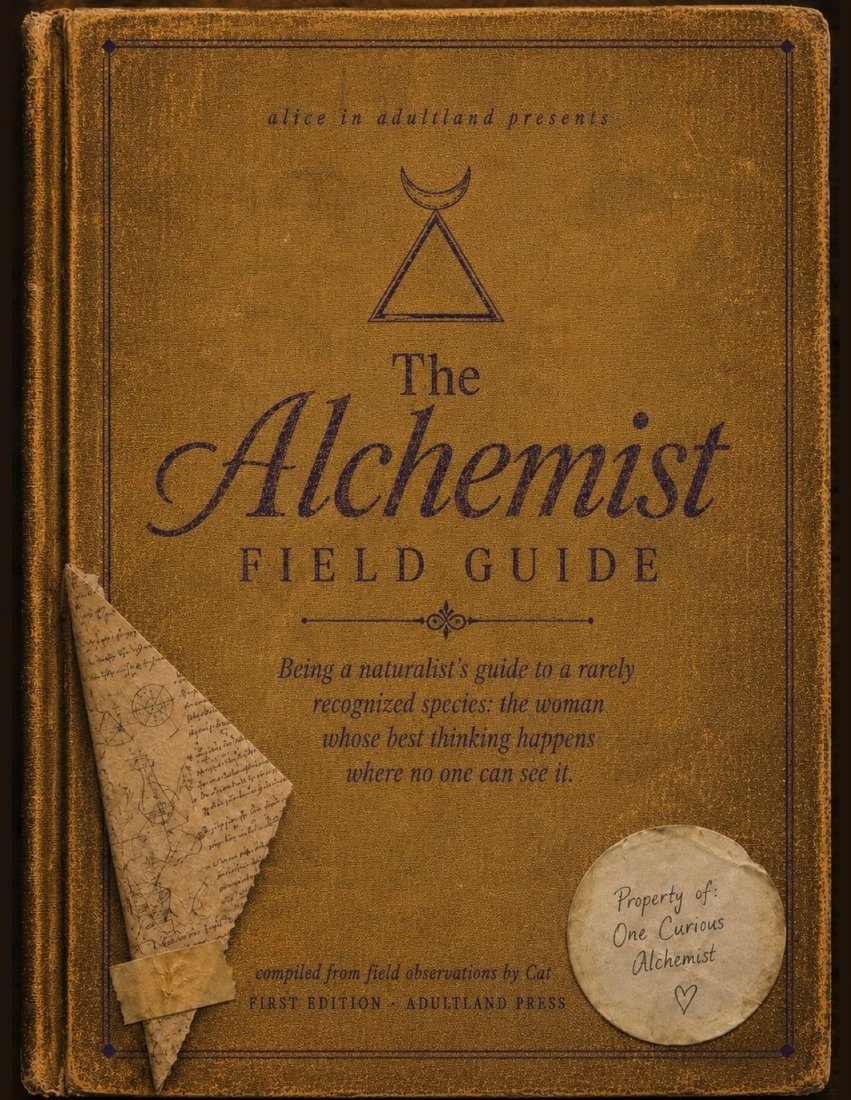
or take the whole shelf
You lead with one. You are made of all three.
Almost nobody comes out as one thing. The whole library is all three field guides, plus a seat inside the private community, for $67.
See the whole library →a peek inside
And this is what it looks like
The room that comes with the whole shelf.
Does anyone else geek out over music?
I have a background in music, so it might just be me, but I really think it’s dopamine seeking. I just spent half…
I just deleted over 30,000 emails, some as old as 8 years. I’ve wanted to do that for a very long time.
I went through some of my old books that I would not read again and put them in a bag to put in my car so I…
The Laundry EpisodeI had no idea there were so many little things I’d been doing wrong…
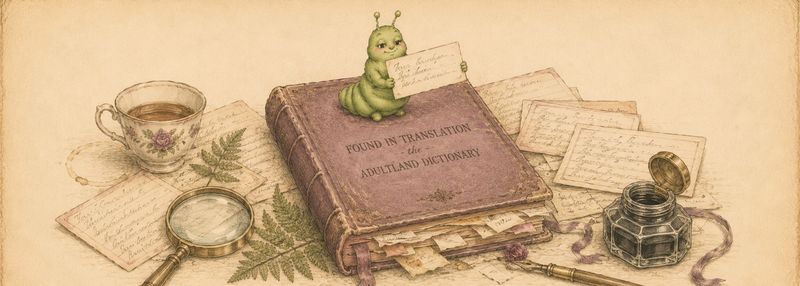
Found in Translation: The Adultland Dictionary
A Small Spell for Big Feelings
There’s a phrase that echoes through my house like a rabbit hole I actually want to fall down…
Activation energy
The invisible effort it takes to start a task, which for our brains can cost more than the task itself.
Looks likeThe email would take ninety seconds, but you circle it for three days.
Satisficing
The skill of recognizing when something is good enough, and allowing that to be enough.
Often mistaken forSettling.
swipe →
The questions you’re already asking
What if I’m not a Cultivator?
Take the Alice Audit. It’s free, ten questions, and it tells you which of the three your mind runs closest to. The Cartographer and Alchemist guides are already here too, so whichever way the audit points, your book is waiting.
Is this the same thing as the community?
No. The guide is a book you keep. The community is a room you live in. They belong to the same world. If you want both, the whole shelf comes with all three guides and a seat inside.
Will this tell me what to do?
No, and that’s on purpose. There’s no plan in here, no protocol, no morning routine. Field guides don’t give the creature instructions. They describe her so well she finally stops taking everyone else’s.
Is it a real book or a PDF?
It’s a digital book, designed like a keepsake. It opens beautifully on your phone at 1am, on a laptop at nap time, on a tablet in the school pickup line. Print any page you want to keep close.
Do I need a diagnosis for this to be for me?
No. Many of the women here are late-diagnosed ADHD or AuDHD. Many are still wondering. The guide is about recognizing yourself, and you don’t need anyone’s paperwork for that.
What if I’m already in therapy?
Then keep going. This isn’t treatment and doesn’t pretend to be. It’s the book you hand your own brain on the nights between sessions, and more than one woman has read a page of it out loud to her therapist.
What if I don’t finish books?
Perfect. This one doesn’t want to be finished. It opens anywhere, reads in any order, and waits on the nightstand between hard days. There’s no place to lose.
What if I’ve already read everything about ADHD?
Then you’ve read the clinical versions. This one isn’t about symptoms or systems. It’s about recognizing yourself on a page, maybe for the first time. Different shelf entirely.
What if I cry?
Some women do, usually when a sentence names something that never had words before. That’s not the book hurting you. That’s the sound of being recognized.
You were never a project.
You were always a garden.
Cat